Deezer says AI-generated music now accounts for 44% of all new uploads to its platform, with nearly 75,000 fully AI tracks being added every day.
The figures, released by the streaming service, cover early 2026 activity and highlight the rapid acceleration of AI-created content across the music industry.
AI-generated music now a major share of uploads
According to Deezer, the platform is receiving around 2 million AI-generated tracks per month, marking a sharp rise from approximately 10,000 daily uploads recorded in early 2025.
Despite the surge in supply, consumption remains relatively low. Deezer says AI-generated tracks account for between 1% and 3% of total streams on the platform.
However, the company reports that up to 85% of those streams are flagged as fraudulent and are subsequently removed from royalty payments.
“AI-generated music is now far from a marginal phenomenon and as daily deliveries keep increasing, we hope the whole music ecosystem will join us in taking action to help safeguard artist’s rights and promote transparency for fans,” said Alexis Lanternier, CEO of Deezer.
“Thanks to our technology and the proactive measures we put in place more than a year ago, we have shown that it’s possible to reduce AI-related fraud and payment dilution in streaming to a minimum. Since January, we have made our detection technology available for licensing, and we’re looking forward to seeing industry peers of all kinds join us in the fight for fairness in the age of AI.”
Detection, tagging and removal from recommendations
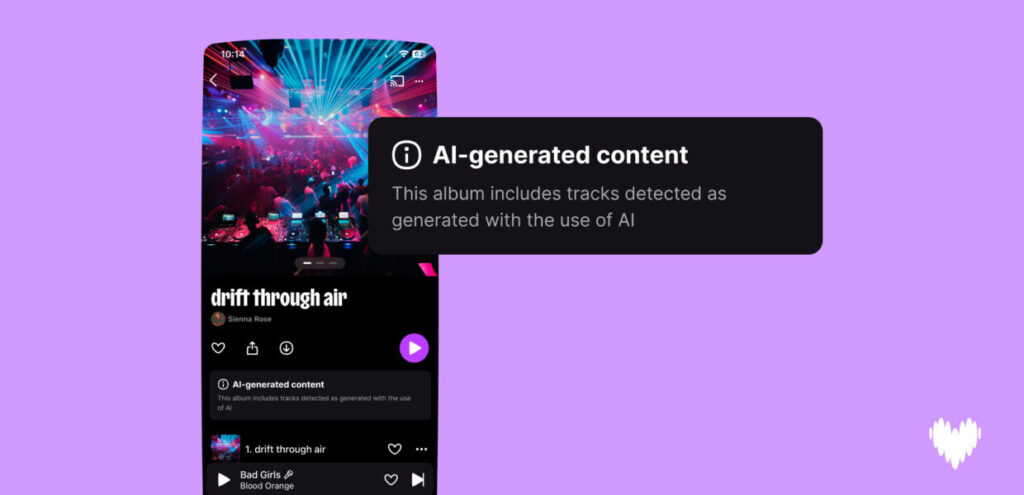
Deezer introduced its AI detection tool in January 2025 and has since identified more than 13.4 million AI-generated tracks on the platform.
It remains the only streaming service currently tagging AI-generated music at scale, according to its own data.
The company has also taken additional steps to limit the impact of synthetic content, including:
- Removing AI-generated tracks from algorithmic recommendations
- Excluding them from editorial playlists
- Stopping storage of high-resolution audio files for such content
Deezer has also begun licensing its detection technology to other companies as part of a broader push for industry-wide standards.
Industry concerns over revenue and rights
The rise of AI-generated music is increasingly seen as a commercial and legal challenge for the wider industry.
A joint study by CISAC and PMP Strategy suggests that up to 25% of creators’ revenues could be at risk by 2028, potentially equating to €4 billion in lost income.
At the same time, consumer research commissioned by Deezer indicates that most listeners cannot easily distinguish between AI and human-made music.
Key findings from a global survey conducted with Ipsos include:
- 97% of respondents could not tell the difference in blind tests
- 80% believe AI-generated music should be clearly labelled
- 73% want transparency when AI tracks are recommended
- 52% think AI tracks should not compete in main music charts
AI tools driving the surge in uploads
Deezer’s detection system is designed to identify tracks generated by leading AI music tools, including Suno and Udio, with the ability to expand coverage as new models emerge.
The company has also filed two patents related to identifying “unique signatures” that distinguish synthetic audio from human-created recordings.
A growing shift in the music ecosystem
While AI-generated music still represents a small share of listening, Deezer’s data points to a significant shift in how music is being created and distributed.
The platform says its current focus is on maintaining transparency, limiting fraud and protecting royalty flows as the volume of AI-generated content continues to grow.