
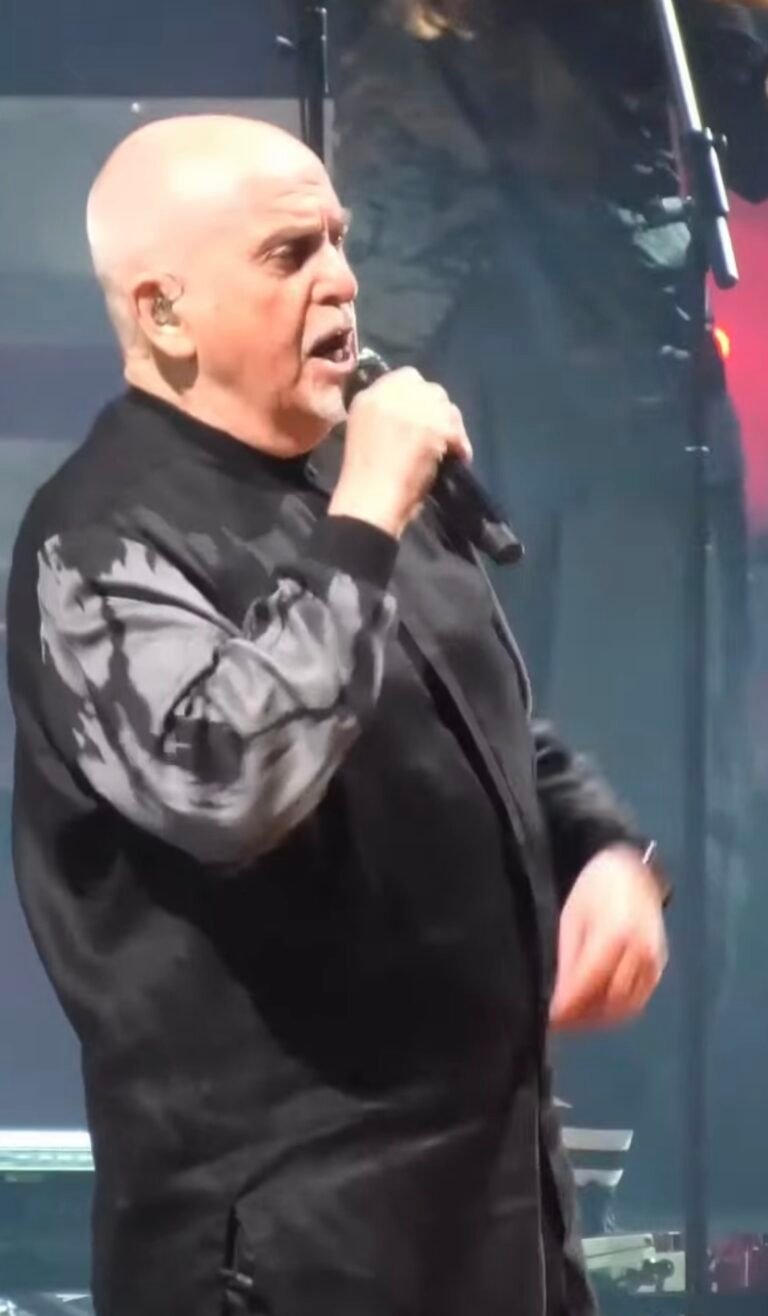
Peter Gabriel has explained why he left Genesis in 1975, revealing that he felt the band was taking itself too seriously and that his creative vision was beginning to differ from that of his bandmates.
The former Genesis frontman, who went on to establish a successful solo career, has reflected on the tensions within the progressive rock group, including his contrasting approach to their elaborate stage performances and Phil Collins’ dislike of the band’s theatrical costumes.
Speaking to Mojo, Gabriel explained that Collins, who eventually replaced him as lead vocalist, wanted to be seen as a jazz musician rather than part of Genesis’ increasingly theatrical image.
Phil Collins struggled with Genesis’ theatrical image
Gabriel recalled how Collins was particularly uncomfortable with the costumes that became a defining feature of the band’s live performances during the 1970s.
Phil used to hate the costumes.
He wanted to be like a jazz musician. That was his image of himself – which I understood – and then he’s got this idiot dressing up in a silly hat or as a sexually transmitted disease.
Gabriel acknowledged that both he and Collins contributed to the band’s identity, but suggested that Genesis sometimes lost perspective by taking its artistic ambitions too seriously.
My vision was part of what made Genesis what it was, as was Phil’s vision. But I think we fall down when we take any of it too seriously.
Peter Gabriel recalls turbulent relationship with Tony Banks
Gabriel also discussed his complicated relationship with Genesis keyboardist Tony Banks, describing a friendship that frequently switched between affection and hostility.
Despite their disagreements, he insisted their arguments were confined to the band’s musical direction and professional affairs.
He and I were this combination of vicious enemies and best friends. Though we only ever argued about band stuff.
The relationship between the two musicians reflected some of the creative tensions within Genesis as the group developed its distinctive progressive rock sound.
Gabriel was confident Genesis would survive without him
Although Genesis were concerned about their future following Gabriel’s departure, the singer said he had no doubts that the remaining members would find a way forward.
He recognised that leaving would give the band an opportunity to develop a different musical identity, even if his own ambitions were taking him in another direction.
Back then we were in this strange situation where the band – and I know this sounds arrogant – were really worried about their future without me.
I, on the other hand, felt confident that they’d do really well, as there was plenty of opportunity for them to create something new.
Whereas my attitude was, ‘F*** the co-operative!’
Genesis subsequently continued with Collins taking over lead vocal duties. The group went on to achieve considerable commercial success, particularly as its sound moved towards a more accessible rock direction.
Solsbury Hill marked the beginning of Gabriel’s solo career
Gabriel quickly established himself outside Genesis with the release of his debut solo single, Solsbury Hill, in 1977.
The song reflected his determination to build confidence as an independent artist following his departure from the band.
He described the track as an optimistic statement about starting again.
It was a hopeful, optimistic song. That first record was me trying to get some confidence outside of the band.
Solsbury Hill became one of the defining songs of Gabriel’s solo catalogue, setting the foundation for a career that would eventually produce several internationally successful albums and singles.
Peter Gabriel reveals how Sledgehammer was recorded
Gabriel also looked back on the creation of Sledgehammer, his biggest global hit, which topped the US Billboard Hot 100 in 1986.
The track appeared on his fifth solo studio album, So, released in 1986, and became one of the most recognisable songs of his career.
However, Gabriel revealed that the recording was never deliberately designed to become a major hit. Instead, it came together during a recording session when the musicians were preparing to leave.
Sledgehammer was a throwaway thing, recorded at the last minute, as the musicians were trying to leave – ‘Hey, let’s try this thing quickly!’
He also challenged the assumption that the song had been written with commercial success in mind.
Everyone thinks the music was written to be a hit, but it wasn’t.
The success of Sledgehammer helped establish Gabriel as a major solo artist in the United States, while its innovative music video became one of the most celebrated visual productions of the MTV era.