Angham is scheduled to perform in Dubai’s Coca-Cola Arena on 19 June 2026, extending a live career that began in 1987 and has continued across Egypt and the wider Arab world for nearly four decades. Known as “The Voice Of Egypt”, the appearance places her once again in the Gulf’s arena circuit, where she remains one of the most consistently booked Egyptian vocalists of her generation.
Her career sits at a rare intersection in Arabic pop, shaped by formal musical training, a family lineage rooted in composition, and a catalogue that has remained active across multiple shifts in the regional music industry.
For non-Arabic speaking readers, The Arabic name Angham (أنغام) translates to “melodies” or “tunes” in English. It is the plural form of the Arabic word nagham (نغم), which means a single sweet sound, note, or rhythm. Very appropriate!
Raised inside Egypt’s formal music tradition
Angham Mohamed Ali Suleiman was born in Alexandria in 1972 into a household already embedded in Egyptian musical culture. Her father, Mohamed Suleiman, was a composer and violinist, and her early exposure to music was shaped through that environment rather than commercial pop structures.
She later studied at institutions including the Cairo Conservatoire and the Arabic Music Institute, placing her within Egypt’s formal classical and semi-classical musical education system.
That background is frequently referenced in biographies of Egyptian popular music as part of what differentiates her from artists who emerged primarily through television talent pipelines or purely commercial production environments.
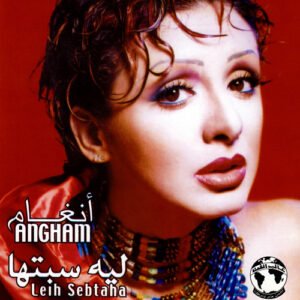
Angham – ليه سبتها - Leih Sebtaha (2001)
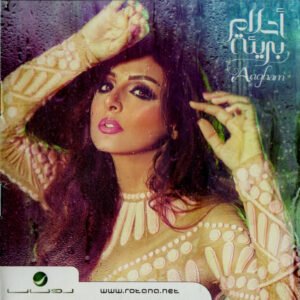
Angham* – أحلام بريئة (2015)
A debut that began a long commercial lifespan
Angham entered the recording industry in the late 1980s while still a teenager. Her early work positioned her within a generation of Egyptian pop vocalists who bridged traditional Arabic melodic frameworks with the emerging commercial pop structures of the 1990s.
Across the 1990s and 2000s, her output expanded through a series of albums that maintained visibility in Egypt and across the Arab region. Her commercial peak resurgence is often linked to her 2007 album Kolma N’arrab, which reportedly sold more than half a million copies across the Middle East in a short window and re-established her as a leading mainstream voice in Arabic pop.
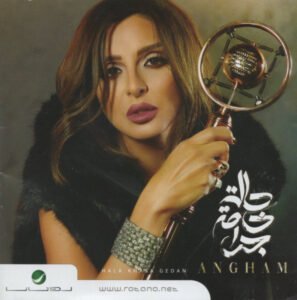
Angham* – حالة خاصة جدا = Hala Khasa Gedan (2019)
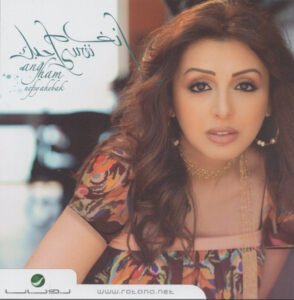
Angham – نفسي أحبك - Nefsy Ahebak (2009)
Voice, phrasing, and how she is positioned within Arabic pop
Angham’s vocal identity is consistently described in music reference material as rooted in Arabic melodic phrasing with strong control across dynamic range and emotional delivery. This places her within a tradition of Egyptian vocal performance that prioritises melodic interpretation over rhythmic experimentation.
Angham has said that from childhood she was influenced by Arabic classics and soul musicians such as Mohammed Abdel Wahab, Fairuz and Umm Kulthum. Her music contains strong influences of gospel urban contemporary music, Arabic classics, R&B, waltz and lately reggaeton. Angham is said to be able to cover all the notes from alto vocal range to six-octave vocal range.
As to her singing style and its evolution throughout the years, Angham said in an interview with enigMa Magazine, “As time goes by, you get more and more in touch with yourself and understand yourself better. You know what suits you better than when you’ve just started; and you discover the styles you feel comfortable with. I always feel that there’s another step further that I can take to better myself as an artist. Just as in life, I like to wear comfortable clothes. When it comes to music, I like to ‘wear’ what reflects my personality”.
She is frequently positioned alongside other major Arab vocalists of her generation, including Amr Diab, Sherine Abdel-Wahab, Elissa, and Assala Nasri, each representing different strands of Arabic pop development across Egypt and the Levant.
Angham: Egyptian conservatory-influenced vocal interpretation within pop structure
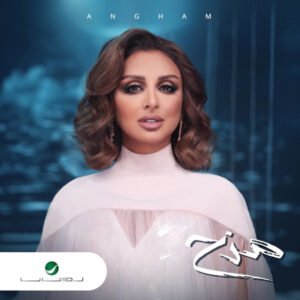
Angham* – مزح = Mazh (2010)
Composers, collaboration, and long-term industry relationships
Angham’s catalogue has been shaped through repeated collaboration with established Egyptian composers and arrangers across different phases of her career.
In Arab pop, vocalists often rotate quickly unless they maintain strong relationships with writers and producers but Angham sits in the opposite category.
Her long-term collaborations with major composers and arrangers are frequently cited as part of her sustained relevance. EniGma Magazine highlights her work with figures such as the late Tarek Akef and Tarek Madkour, both of whom contributed to shaping her sound across different eras.
A catalogue that remains active across generations
Angham’s music remains available across major streaming platforms and continues to circulate within curated Arabic pop and Egyptian classics playlists. Her catalogue spans early cassette and CD-era releases through to digitally distributed contemporary work.
What is verifiable is continued availability and sustained live demand across regional touring circuits, particularly in Egypt and the Gulf.
What cannot be responsibly claimed without platform data is the specific mechanism of discovery among younger listeners, such as algorithmic recommendation or Gen Z listening behaviour. Those claims are not supported by publicly available verified data.
The Dubai performance on 19 June 2026
Angham’s scheduled Dubai concert on 19 June 2026 continues a pattern of high-profile Gulf performances that have remained a consistent part of her live career.
Dubai’s position as a regional touring hub has made it a central stop for established Arabic pop artists, where multi-decade catalogues are performed to audiences spanning multiple age groups.
In Angham’s case, the live format functions as a bridge across eras of her catalogue, rather than a retrospective presentation of legacy material alone.
Angham – محدش يحاسبني (2010)
Essential Angham Playlist for new listeners
If you are discovering Angham for the first time, these tracks provide an excellent introduction. Click below for the Angham playlist on YouTube:
Angham discography
According to publicly available discography records, Angham’s studio albums include:
1987: Fil Rokn elBaeed elHady (In The Far Distant Corner)
1988: Awal Gawab (First Letter)
1989: Lalili Lali
1989: Layeg (It Suits)
1989: Shokran (Thank You)
1990: Ettafakna (We Agreed)
1991: Bibasata Kida (As Simple As That)
1992: Inta El A’alam (You Are The World)
1992: Shayfak (I See You)
1993: Ella Ana (Except Me)
1994: Inta Mahboubi (You Are My Beloved, love)
1995: Baollak Eih (Tell You What)
1996: Akdar (I Can Make It Through)
1996: Shey Daa’ (Something Lost)
1997: Betheb Meen (Who Do You Love)
1998: Khally Bokra li Bokra (Leave Tomorrow for the Future)
1999: Wahdaniya (Lonely Woman)
2001: Leih Sebtaha (Why Did You Leave Her)
2003: Omry Maak (My Life With You)
2005: Bahibbik Wahashteeny (Loving You, I Miss You)