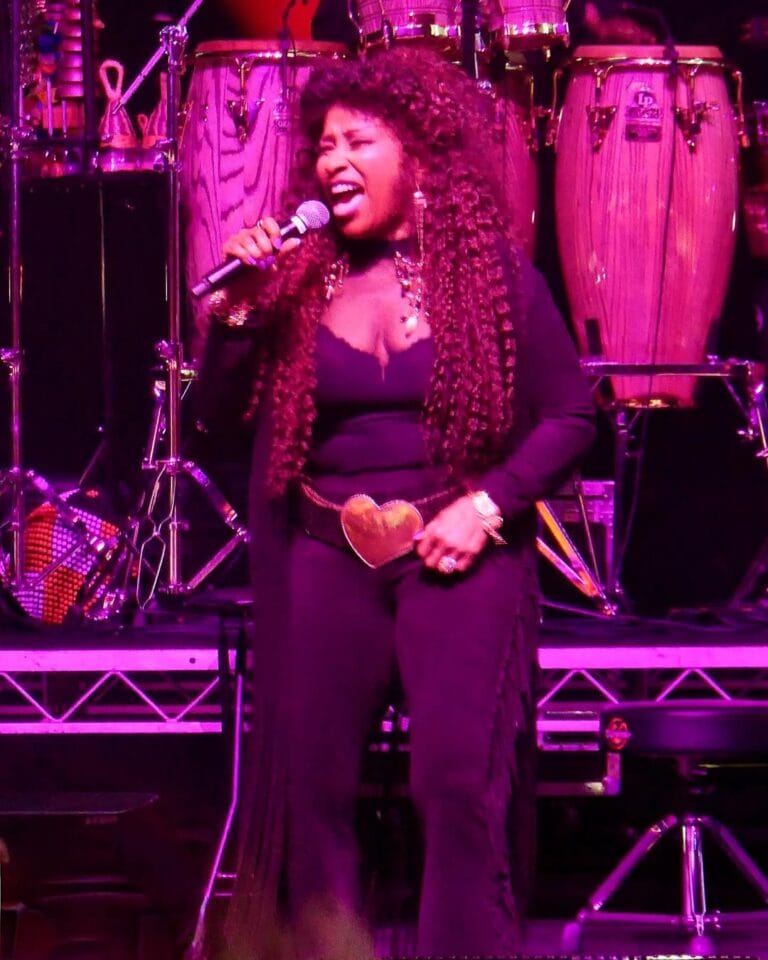
Chaka Khan has criticised modern pop performers, claiming some rely on image and stage theatrics to make up for a lack of vocal ability.
Speaking on the Table Manners with Jessie and Lennie Ware podcast, the 73-year-old artist addressed how performance standards have evolved, particularly for female artists.
“The game has changed” for live performers
During the conversation, host Jessie Ware referenced earlier remarks Khan made alongside Patti LaBelle and Stephanie Mills about focusing purely on vocals rather than spectacle.
Khan responded by pointing to a shift in expectations around live performance:
“The game has changed because all bets are off. These women are doing any and every d*** thing on stage and trying to sing, too. And the ones who are doing the most physicalities, with their butts and stuff, and their body parts, are the ones that usually are compensating for what they don’t have.”
Co-host Lennie Ware added, “Move your bottom if you don’t,” prompting Khan to double down on her stance:
“[Have the] voice. Absolutely. I came to sing, and I came to really do a good job, and that’s hard work. I don’t feel like it’s hard work once I’m doing it. I feel great.”
Performance vs vocals in today’s pop landscape
Khan’s comments reflect a long-running debate within the music industry around the balance between vocal performance and visual presentation.
While modern pop shows often prioritise choreography, staging and visual identity, artists from earlier generations have frequently emphasised live vocal delivery as the core of performance.
Reflecting on a 50-year career
Elsewhere in the interview, Khan spoke about her longevity in the industry, noting that she does not dwell on the past despite marking five decades in music.
“I’m not nostalgic at all. I’m just busy with my life, and suddenly I’ve been doing it for 50 years.
“I’m just living every day like everybody else, so I’m surprised when birthdays come up. I’m like, ‘Oh, wow, tempus fugit,’ and I keep it moving. I’m really a next person.
“The beautiful thing is throughout my career, I’ve always had a lot of love. That has been maybe the high point of what I do: the love that I receive from people.”
Her remarks arrive at a time when conversations around authenticity, performance standards and the role of image in pop continue to shape how artists are judged by both fans and the industry.