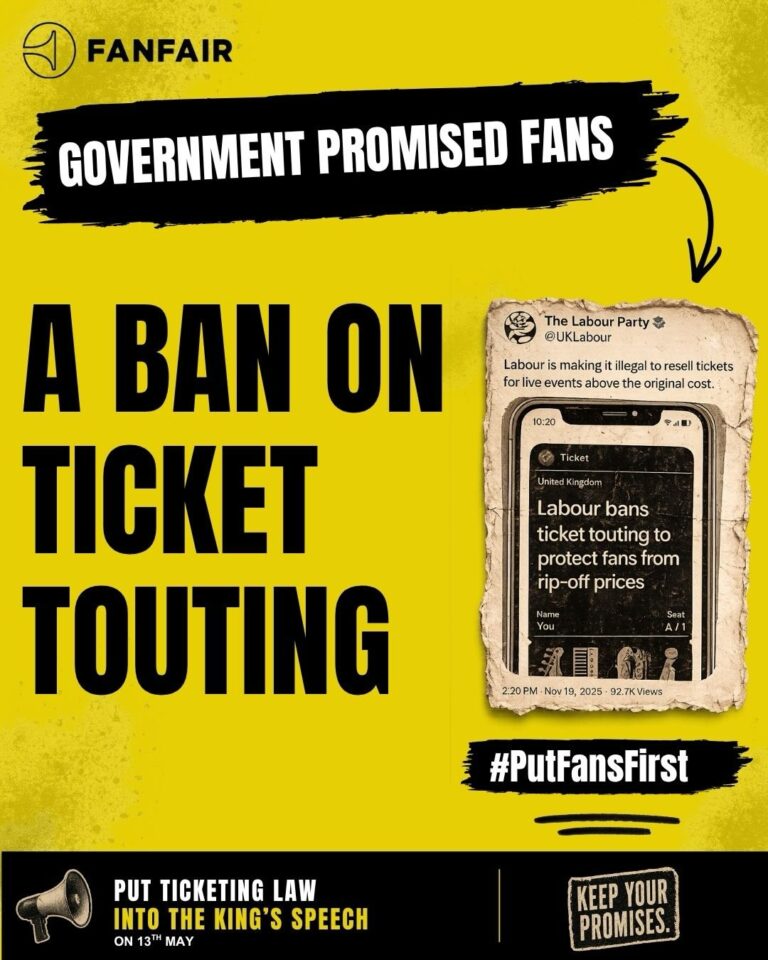
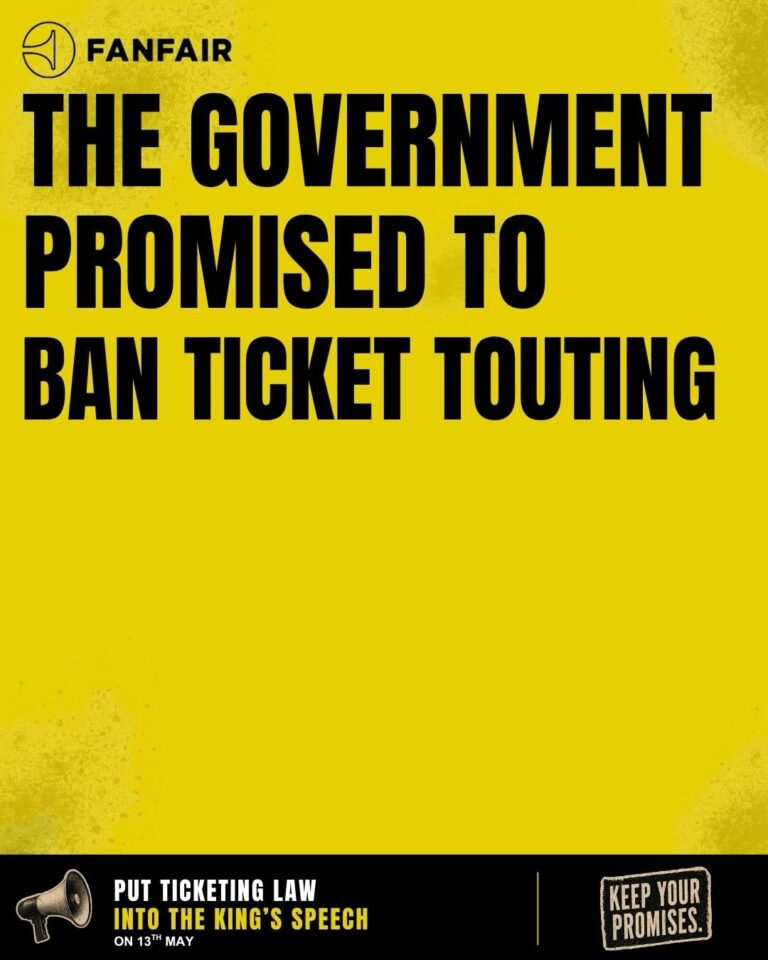
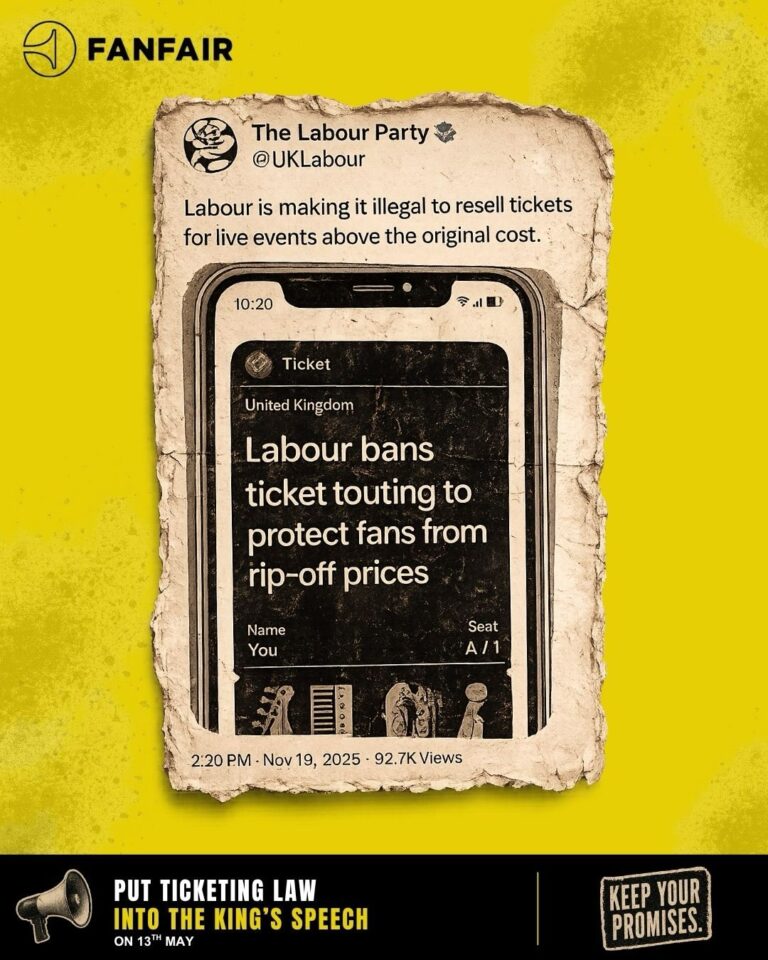
Leading UK artists and music industry organisations have launched a new campaign urging Prime Minister Keir Starmer to honour Labour’s pledge to crack down on ticket touting and introduce stronger protections for fans.
The campaign, led by FanFair Alliance, is calling on the government to formally introduce legislation in the upcoming King’s Speech that would ban tickets being resold above face value.
Posters appear across Prime Minister’s constituency
The latest push included posters appearing across Starmer’s constituency of Holborn & St Pancras, including outside venues such as KOKO, Electric Ballroom, O2 Forum Kentish Town and The Jazz Cafe.
The campaign follows an open letter sent in November 2025 signed by major artists including Coldplay, Dua Lipa, Radiohead, Sam Fender, Iron Maiden and Robert Smith.
Government previously pledged action
Last year, the UK government announced proposals that would make it illegal to resell tickets for live events above their original purchase price.
Business Secretary Peter Kyle previously described the plans as:
“bold new measures”
He added they would:
“smash the model of ticket touts to pieces.”
Culture Secretary Lisa Nandy also backed the proposals, saying:
“will shut down the touts’ racket and make world-class music, comedy, theatre and sport affordable for everyone.”
However, according to reports in the Financial Times, the government may now introduce only draft legislation in the King’s Speech rather than fully implementing the policy immediately. Critics say that could delay enforcement by as much as three years.
Fanfair Alliance warns against delays
Adam Webb, campaign manager, FanFair Alliance, criticised the potential delay, arguing the government risks abandoning promises already made to fans and the music sector.
“We were promised fans would be put first. We were promised an end to exploitative ticket touting.”
“Having made such strident commitments in November last year, it would be bewildering if the government now decided to postpone legislation and relegate the interests of UK consumers.”
“We urge them to stick to their word and deliver these measures without delay.”
Music industry leaders push for immediate legislation
Annabella Coldrick, chief executive, Music Managers Forum said the industry expected action in 2026 rather than further discussion.
“We were told 2026 would be the year of action, not announcements.”
“It’s ridiculous that after a manifesto commitment, full consultation and cross party support this government doesn’t appear to be able to actually deliver any change.”
Jon Collins, CEO, LIVE warned that delaying legislation could cost consumers hundreds of millions of pounds.
“We welcomed the Prime Minister’s promise to tackle touts last year but a draft bill is not enough.”
“Fans have waited long enough for an end to the ticket touting scandal, and there is no need for further consultation. It’s time for government to deliver on its promise.”
Meanwhile, UK Music chief executive Tom Kiehl argued the resale market continues to damage both fans and the wider industry.
“Unscrupulous ticket touts have been ripping off the UK’s music fans for too long and undermining our world-leading sector which contributes £8 billion a year to the economy.”
“Action is long overdue. We need Ministers to live up to their promises to cap ticket prices and finally tackle the rampant abuse of the secondary ticketing market.”
Government says it remains committed
A government spokesperson responded to the campaign by insisting ministers still plan to act.
“We set out decisive plans last year to stamp out touting once and for all, and we are absolutely committed to delivering on them as soon as possible for the benefit of fans and industry.”
Ticket resale remains major issue for live music fans
Industrial-scale ticket resale has become one of the most controversial issues in the UK live entertainment business, with artists, managers and promoters increasingly criticising inflated secondary market pricing and automated ticket-buying bots.
Campaigners argue stronger regulation would make live events more affordable and prevent professional resellers from exploiting fan demand during major tours and festivals.