
When members of the Baida family established a record company in Beirut during the first decade of the twentieth century, they could hardly have imagined the scale of what would follow. From a small family-run operation with ties to Germany’s recording industry, Baidaphon grew into one of the most influential music companies in the Middle East, helping to document, distribute and commercialise Arabic music across an enormous geographic area stretching from North Africa to Iran.
Founded around 1906, although the exact date remains uncertain, Baidaphon is widely regarded as one of the oldest locally owned record companies in the Arab world. Long before multinational labels established a significant regional presence, the company was recording Arab artists, building distribution networks and creating a business model that challenged the dominance of foreign-owned competitors.
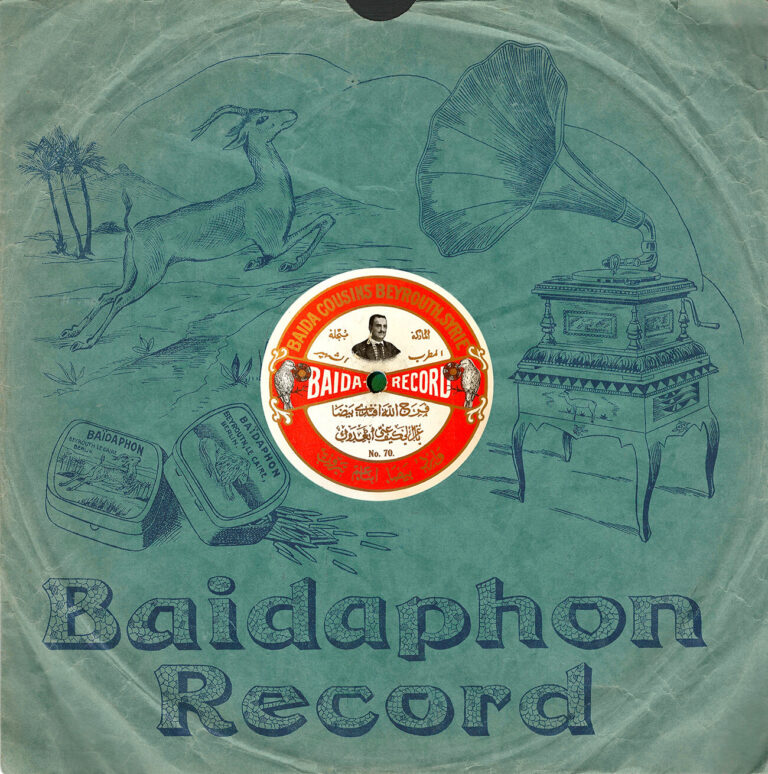
The Baida Family And The Birth Of An Arabic Record Label
The story begins in Beirut with the Lebanese Baida family.
Among the earliest figures associated with the company was Farajallah Baida, one of the first Lebanese recording artists and the uncle of singer Eliyya Baida. Historical records indicate that the first commercial recording released by the company featured Farajallah himself, placing the family at the centre of both the artistic and commercial sides of the business.
The label’s early success depended on a network that extended far beyond Lebanon.
Michel Baida, who was based in Berlin, worked alongside his cousins Butrus and Jibran Baida to establish relationships within Germany’s rapidly growing recording industry. Through those connections, the family secured a manufacturing agreement with the German record company Lyrophon, allowing Arabic recordings to be pressed and distributed on a professional scale.
At a time when recording technology was concentrated in Europe, this arrangement provided Baidaphon with a crucial advantage.
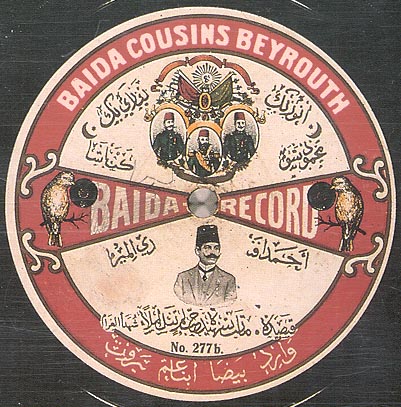
From Baida Record To Baidaphon
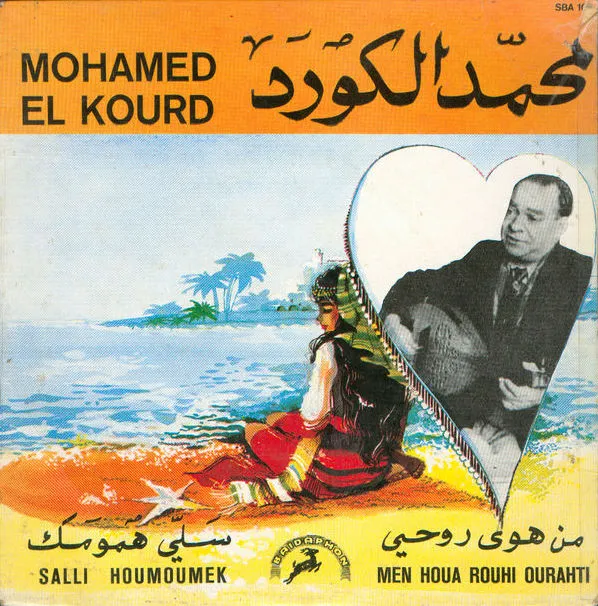
The company’s earliest releases were issued under the name “Baida Record”.
That changed in 1912.
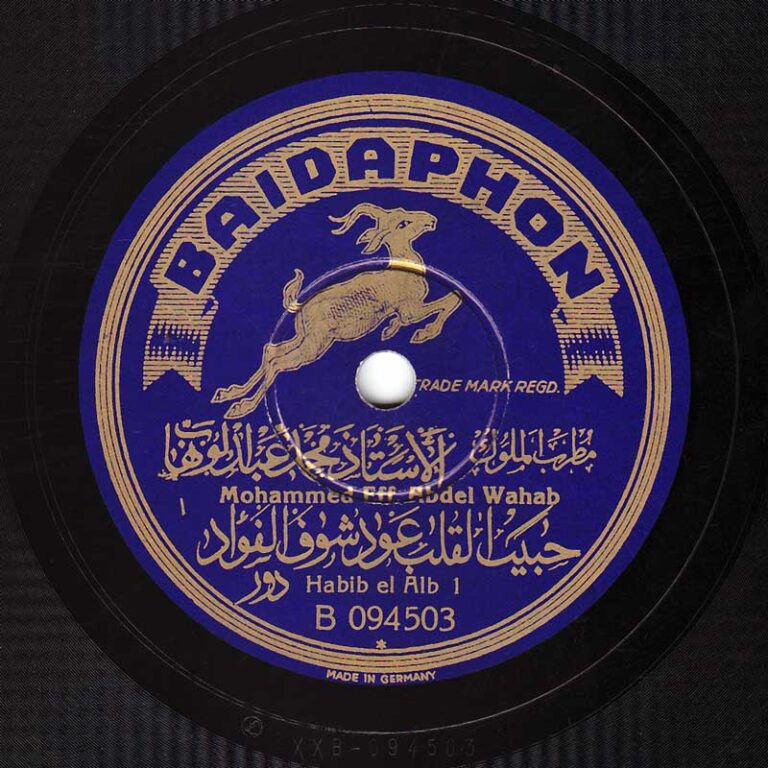
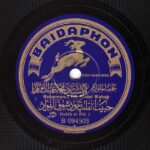
On 11 January 1912, the Baidaphon trademark was officially registered, creating the brand that would become known throughout the Arabic-speaking world. Just two months later, on 14 March 1912, the company registered what would become its most recognisable visual identity: the famous leaping gazelle logo.
The gazelle would remain one of the most distinctive trademarks in Arab music history, appearing on countless recordings distributed throughout the region during the twentieth century.
Building A Music Business Across Continents
Although Beirut served as the company’s home base, Baidaphon was never confined to a single city.
The company quickly established branches in Berlin and Cairo. The Berlin office oversaw manufacturing, while Cairo provided access to what was already becoming the most important commercial music market in the Arab world.
From there, the business expanded rapidly.
By the mid-1920s, Baidaphon had developed a network that stretched from Tunisia in the west to Iran in the east. Few regional companies could match its geographic reach.
This expansion allowed the label to distribute recordings across a vast territory connected by language, trade routes and cultural exchange.
Challenging The Foreign Recording Giants
During the early twentieth century, much of the recording industry in the Middle East was controlled by European companies.
Baidaphon deliberately positioned itself as an alternative.
The company promoted itself as the only Arabic record label, presenting its local ownership as a point of difference in a marketplace dominated by foreign competitors.
That strategy resonated with both artists and audiences.
According to historical accounts, the label recruited many of the leading singers and folk musicians of the era and reportedly accumulated a fortune approaching one million dollars in a remarkably short period, an extraordinary figure for the period.
Recording The Stars Of The Arab World
Baidaphon’s catalogue became a who’s who of early Arabic music.
The company recorded many of the most important performers working across the region, with Egyptian artists contributing significantly to its commercial success.
Among the label’s biggest sellers were recordings by celebrated Egyptian vocalists Abdel Hayy Helmy and Sayyed al-Safty, whose popularity helped generate substantial revenue for the business during its expansion years.
The company’s willingness to record both established stars and traditional folk musicians helped preserve a wide spectrum of Arabic musical culture at a time when recording technology was still relatively new.
Mohamed Abdel Wahab And The Next Chapter
The company’s structure changed following the death of Butrus Baida in the early 1930s.
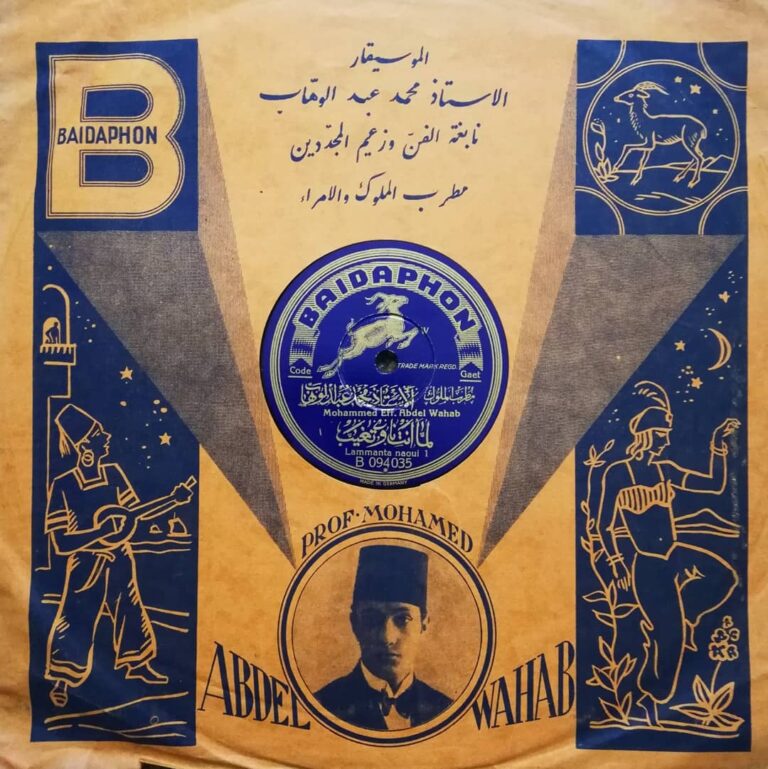
As the business evolved, legendary Egyptian composer, singer and actor Mohamed Abdel Wahab became involved with the organisation.
His participation marked the beginning of a new phase for the company.
During the 1940s, Baidaphon’s Egyptian operations were transformed into Cairophon Records, while related ventures emerged elsewhere in the region, including Tahaphon in Yemen. Meanwhile, Baidaphon continued operating throughout the Levant and North Africa.
The restructuring reflected the growing complexity of the Arab music industry, which by then had developed into a sophisticated network of artists, recording studios, distributors and broadcasters.
The Legacy Of Baidaphon
Today, Baidaphon occupies a unique position in Middle Eastern music history.
It was more than a record label. It was an infrastructure project, a cultural enterprise and a commercial pioneer operating at a time when the modern Arab music industry was still being invented.
Its founders built manufacturing partnerships across Europe, established distribution networks across multiple continents, recorded many of the era’s most important performers and created one of the region’s earliest truly international music businesses.
Long before streaming platforms made music instantly available across borders, Baidaphon had already demonstrated that Arabic music could travel, connect audiences and build a market that extended far beyond its country of origin.
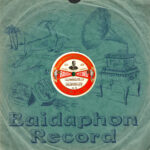

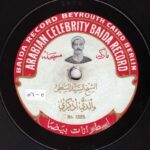
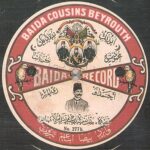
Artists who have recorded tracks on Baidaphon include:
- Sheikh El Afrit
- Sheikh Hamada
- Mohammed Abdel Wahab
- Asmahan
- Mahieddine Bachtarzi
- Umm Kulthum
- Abdelkader El-Khaldi
- Mounira El-Mahdeya
- Leila Mourad
- Zaki Mourad
- Abu al-Ila Muhammad
- Habiba Msika
- Halim el-Roumi
While the majority of artists sang in Arabic, Baidaphon also recorded Greek Orthodox hymns, Turkish instrumental compositions and songs in Armenian, Assyrian, Kurdish, Azerbaijani and Hebrew.