

Before Elvis swivelled his hips or The Beatles crossed the Atlantic, the pop charts were already being ruled by powerhouse women. The 1950s may be remembered for poodle skirts and doo-wop harmonies, but it was also a golden age for female vocalists who laid the groundwork for nearly every pop singer who followed. From jukebox ballads to early rock and roll, these women didn’t just sing the hits, they helped invent the pop music industry.
This article takes a closer look at the female singers who defined the 1950s in both the United States and the United Kingdom, blending vocal charisma with commercial clout and cultural impact. Some became household names; others were trailblazers whose legacies only grew in the decades that followed.

Patti Page: The voice that sold the most
In the U.S, no female singer outsold Patti Page during the 1950s. Known for her clear tone and technical precision, Page scored hit after hit on the American charts, including the massive 1950 single “Tennessee Waltz”. That track alone sold over 10 million copies worldwide and remains one of the best-selling singles of the 20th century.
Page was also one of the first artists to overdub her own harmonies, a now-common studio technique. Her blend of pop and country made her a crossover pioneer long before the term was fashionable.
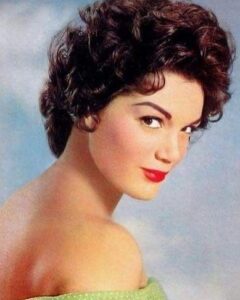
Connie Francis: America’s first teen idol
Though she arrived a little later in the decade, Connie Francis became the first woman to dominate the Billboard Hot 100 as a solo act. With her breakout 1958 hit “Who’s Sorry Now”, she tapped into both teenage heartbreak and adult nostalgia, making her one of the first artists to straddle generations.
By 1960, she’d hit Number One in the U.S. with “Everybody’s Somebody’s Fool” and became a fixture on radio and TV. She also charted in the UK, thanks to her rendition of “Lipstick on Your Collar”, which peaked at No. 5 in 1959.

Kay Starr: From jazz to pop and back again
A vocal chameleon, Kay Starr scored hits in jazz, pop and early rock and roll. Her signature song, “Wheel of Fortune”, was a US. No. 1 in 1952 and sold over a million copies.
Though less remembered today, Starr was admired by peers for her phrasing, rhythmic control and fearless delivery, influencing younger singers including Brenda Lee and Patsy Cline. She was also one of the few white singers of the time to openly credit Black artists as a core influence.
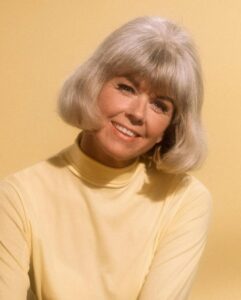
Doris Day: The voice of post-war optimism
With her sunny tone and girl-next-door image, Doris Day became a pop sensation in the early 1950s, even as her career in film exploded. Songs such as “Secret Love” (1953) and “Que Sera, Sera (Whatever Will Be, Will Be)” (1956) were chart-toppers on both sides of the Atlantic.
“Que Sera, Sera” hit No. 1 in the UK and became her signature song, winning the Academy Award for Best Original Song. Day’s controlled vibrato and emotional restraint defined the vocal style of the post-war era.
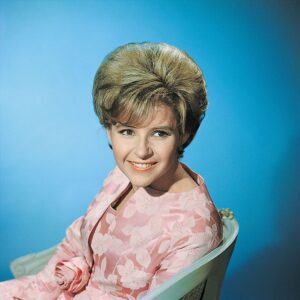
Brenda Lee: Little Miss Dynamite
Though she stood just 4’9″, Brenda Lee had a voice that could stop traffic. Her recording career began in the late 1950s when she was still a teenager, but her first US. No. 1 came in 1960 with “I’m Sorry”, a track she recorded at just 15.
In the UK, she hit the charts with “Sweet Nothin’s” (1959), which cracked the Top 5. Her mixture of rockabilly swagger and vocal maturity made her one of the most exciting singers of the era and a rare artist who could jump between ballads and early rock and roll without losing her core audience.

Peggy Lee: Jazz intelligence meets pop cool
A master of phrasing and emotional understatement, Peggy Lee brought a jazz sensibility to pop music. Tracks such as “Fever” (1958) turned minimalist arrangements into major chart moments.
Though often pigeonholed as a “cool” singer, Lee was a formidable songwriter, penning many of her own tracks and co-writing songs for Disney’s Lady and the Tramp. In the UK, “Fever” peaked at No. 5, helping to cement her international reputation.

Alma Cogan: Britain’s girl with the giggle
While America had Connie and Patti, the UK had Alma Cogan, one of the most recognisable female singers of the 1950s. Known for her vibrant stage presence and distinctive laugh, Cogan racked up a string of hits including “Dreamboat” which hit No. 1 in 1955.
Though her popularity waned with the arrival of beat music in the 60s, Cogan’s impact on British pop was significant. She was a regular on BBC radio and became a fashion icon as well as a singer. She even recorded covers of American hits, including Connie Francis’s songs, for the UK market.

Jo Stafford: The singer’s singer
Jo Stafford was often described as a singer other singers admired. She possessed a level of pitch accuracy and emotional subtlety that made her recordings almost flawless. With tracks such as “You Belong to Me” (1952), she bridged the gap between big band and pop balladry.
Though less flashy than her contemporaries, Stafford’s influence stretched far beyond chart positions. She was also one of the first female artists to host her own network television show in the U.S.
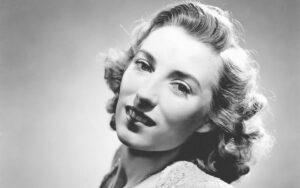
Vera Lynn: The forces’ sweetheart
Though her greatest fame came during World War II, Vera Lynn continued to record and chart well into the 1950s. In 1954, she scored a Top 10 UK hit with “My Son, My Son” and remained a beloved figure in British popular music.
Her style, rooted in pre-war traditions, was seen as old-fashioned by the late 50s, but Lynn’s patriotic and maternal image kept her relevant. She remains one of the only British artists to top the UK album charts in their 90s.
And finally…
The 1950s were not a warm-up act for the men of the 60s. They were a showcase of astonishing vocal talent from women who carved out success in a male-dominated industry. These singers were not simply the “voices” behind popular songs, they were innovators, businesswomen, stylists, and songwriters. Many crossed borders, genres and cultural barriers long before such things were considered commercially viable.
Their voices still echo through today’s charts, sometimes literally, as TikTok and streaming platforms revive their catalogues for new generations. The best female singers of the 1950s didn’t just shape the decade, they shaped what pop music would become.