
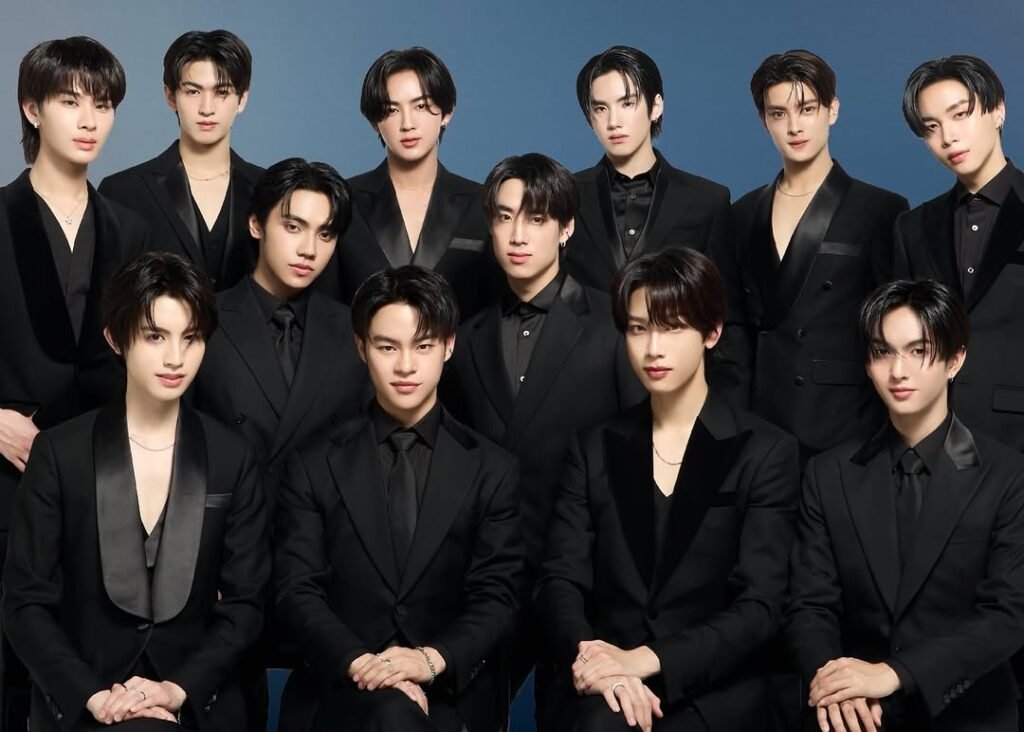
For years, the global conversation around Asian pop music has largely revolved around South Korea and Japan. K-Pop became a worldwide phenomenon, J-Pop maintained its massive domestic strength, and both developed loyal international audiences. Now another movement is gathering momentum: T-Pop. Thailand’s fast-growing pop music industry, is expanding beyond its home market and building a fanbase that stretches across around the world.
What makes T-Pop particularly interesting is that its rise is not being driven by streaming alone. Instead, it sits at the centre of a broader entertainment ecosystem that combines music, television, fandom culture, social media, live experiences, fashion, tourism and brand partnerships.
With Thai music consumption growing, international partnerships accelerating and a new generation of artists attracting millions of followers, T-Pop is becoming one of the most fascinating developments in the global music business.
What exactly is T-Pop?
T-Pop, short for Thai pop music, refers to contemporary popular music created in Thailand. While the genre has roots stretching back several decades, the modern incarnation blends Western pop, R&B, hip-hop, electronic music and idol culture with Thai language, identity and storytelling.
Thailand’s popular music scene began evolving rapidly during the 1980s and 1990s, creating a domestic system that produced household names and major record labels. However, much of that success success remained within Thailand itself. Of course, YouTube, Spotify, TikTok and Instagram have removed geographical barriers and also given Thai artists direct access to international audiences but at the same time, production standards across Thailand’s music industry have also improved dramatically. Music videos have become more ambitious, artist development became more sophisticated and labels began actively looking beyond Thailand’s borders. The result is a new generation of Thai artists capable of competing on a global stage.

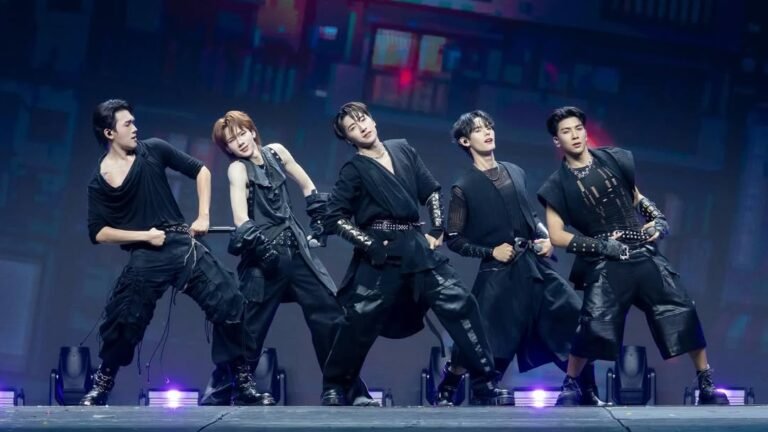
How Thailand quietly built a music industry worth billions
The growth of T-Pop is not simply anecdotal. The numbers suggest an industry that is becoming increasingly significant.
According to research from SCB Economic Intelligence Center (SCB EIC), combined revenue among T-Pop labels is expected to reach 11 billion baht (£250 million) in 2026 and rise to approximately 13 billion baht (£295 million) by 2029.
Thailand’s music sector returned to pre-pandemic levels in 2022, helped by the return of concerts, festivals and live entertainment. Since then, momentum has continued to build. Streaming has played a role, but it is only part of the story.
SCB EIC reported that Thai music’s share of domestic streaming consumption increased from 35% in 2021 to 50% in 2024. Its research also found that 71% of respondents were listening to more T-Pop than before, rising to an impressive 81% among Generation Z listeners.
Those figures point towards a growing confidence in homegrown artists, but they also reveal something else. Thai audiences are becoming increasingly invested in their own music culture rather than simply consuming international hits.
The superfan economy behind T-Pop’s rise
One of the most important reasons T-Pop has developed so quickly is that the industry understands the value of fandom. For decades, the music business measured success largely through album sales and chart positions. Today, the most valuable audiences are often the smallest.
Research from MIDiA suggests that superfans typically represent less than 2% of an artist’s audience but can generate up to 42% of overall revenue.
That statistic helps explain why T-Pop companies place so much emphasis on fan engagement.
Fans are not simply listening to songs, they are attending concerts, buying merchandise, collecting photo cards, buying physical albums, joining fan clubs, participating in fan meetings and supporting brand partnerships linked to their favourite artists.
According to SCB EIC, 86% of fans who support artists spend repeatedly across multiple categories.
Concert promoters, venues, hotels, airlines, retailers, restaurants, transport operators and tourism authorities all benefit when thousands of dedicated fans travel to support artists.


The BL and GL connection
One of the biggest factors behind T-Pop’s international growth has little to do with music and more to do with television.
Thailand has become the undisputed global leader in BL, or “Boys’ Love” and GL (Girls’ Love) dramas. These TV series focus on romantic relationships between same sex characters and have attracted enormous audiences throughout Asia, Latin America, Europe and North America.
Series such as 2gether, Bad Buddy, KinnPorsche, The Eclipse, Gap: The Series and 23.5 have helped create passionate global fan communities.
Many of the actors appearing in these productions are also singers. They release soundtracks, perform live, sign endorsement deals and build careers that span multiple entertainment sectors.
For countless international fans, discovering a Thai television series also becomes the gateway to discovering Thai music.
Meet the artists leading the T-Pop movement
T-Pop is not a single sound, it is a diverse scene populated by solo artists, idol groups, singer-songwriters, rappers and bands.
Among the most internationally recognised names is MILLI, whose blend of rap, pop and Thai cultural references has earned global attention. Her appearance at the 2022 edition of Coachella Valley Music and Arts Festival made her the first solo Thai artist to perform at the event.
Other major artists helping drive the genre forward include:


Collectively, these artists represent the breadth of modern Thai music. Some are rooted in idol culture and others come from independent, alternative or singer-songwriter traditions. Together, they are helping define what T-Pop means to international audiences.
Why brands are paying attention
The relationship between artists and brands has become another important growth driver.
SCB EIC found that 84% of T-Pop fans buy products or services endorsed by artists they follow. That level of influence has made artist partnerships increasingly attractive for companies looking to reach younger consumers.
Limited-edition merchandise, exclusive fan experiences, branded photo cards and lucky-draw events have become powerful marketing tools.
The result is a commercial ecosystem where artists, labels and brands all benefit from the same highly engaged communities.
International partnerships are accelerating growth
Thailand’s music industry is also becoming increasingly outward-looking. One of the most significant recent developments was the strategic partnership between GMM Music and Tencent Music Entertainment, which valued GMM Music at approximately US$700 million.
The partnership was designed to help expand Thai music into larger international markets, particularly China, while creating additional opportunities across the fan economy.
At the artist level, collaborations, overseas tours and international festival appearances are becoming more common. Groups such as BUS because of you i shine have already begun expanding into regional markets through dedicated fan events and touring activity.
Can T-Pop become Thailand’s next major cultural export?
The obvious comparison is K-Pop, but Thailand may not need to replicate South Korea’s model to succeed.
Thai artists often project a sense of accessibility that resonates strongly with fans. The country’s entertainment industry has successfully blended music, television and fandom culture in ways that feel organic rather than manufactured. The BL and GL ecosystem provides a unique pathway for audience growth, while social media allows artists to build direct relationships with fans around the world.
The industry still needs continued investment, stronger intellectual property protections and more experienced music-business infrastructure but the foundations are already in place. Thailand has the artists, the audiences and a growing international network of partners helping its music reach new markets.
What began as a domestic music scene is becoming something much bigger. T-Pop is no longer simply Thailand’s soundtrack, it is rapidly emerging as one of the country’s most powerful cultural exports.






RELATED