
Today, 13 May marks the 76th birthday of Stevie Wonder, one of the most influential recording artists in modern music history. Born Stevland Hardaway Judkins in Saginaw, Michigan in 1950, Wonder transformed from Motown child prodigy into a defining creative force across soul, funk, pop, jazz and R&B, shaping the sound of popular music through the 1970s and beyond. More than six decades after his first recordings, his catalogue continues to influence artists across generations and genres.
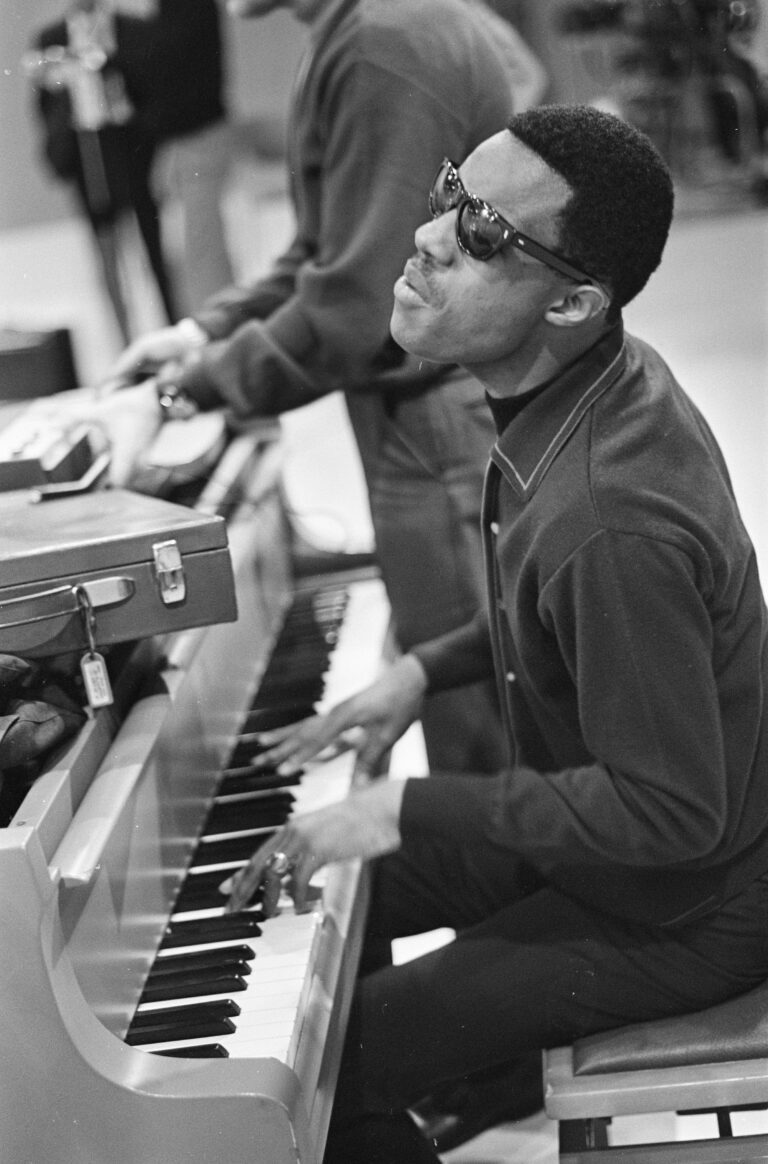
The child prodigy who rewrote Motown’s rules
Stevie Wonder signed to Motown’s Tamla label at just 11 years old after being discovered by Ronnie White of The Miracles. Berry Gordy reportedly named him “Little Stevie Wonder” because of his musical ability at such a young age.
In 1963, aged 13, Wonder scored a US No. 1 with “Fingertips Pt. 2”, making him the youngest artist ever to top the Billboard Hot 100. That record still stands.
What followed was unusual even by Motown standards. Most artists on the label worked within a highly controlled production system. Wonder eventually fought for creative independence, renegotiating his contract in 1971 when he turned 21. The deal gave him greater artistic control, higher royalties and ownership leverage that few Black artists had secured at the time.
That decision changed everything.
The classic album run that defined the 1970s
Between 1972 and 1976, Stevie Wonder released Music of My Mind, Talking Book, Innervisions, Fulfillingness’ First Finale and Songs in the Key of Life.
That sequence is regularly compared to landmark creative runs by Prince, Bob Dylan and The Beatles.
Talking Book introduced “Superstition” and “You Are The Sunshine Of My Life”. Innervisions delivered socially conscious songwriting through tracks such as “Living for the City” and “Higher Ground”. Fulfillingness’ First Finale won Album of the Year at the Grammys in 1975, despite Wonder recovering from a near-fatal car accident the previous year.
Then came Songs in the Key of Life in 1976.
Why Songs In The Key Of Life still towers over popular music
Songs in the Key of Life remains Stevie Wonder’s defining statement, a sprawling double album with an additional four-track EP that fused soul, jazz, funk, pop, Latin music and social commentary into one coherent work.
Approx sales: 5.6 million+ certified copies globally
UK chart: No. 2
US chart: No. 1
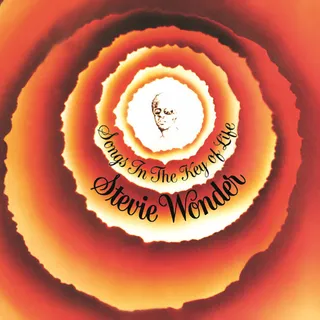
The album produced “Sir Duke”, “I Wish”, “Isn’t She Lovely” and “As”, while also addressing poverty, race, spirituality and joy with unusual depth for a mainstream blockbuster release.
Critics and artists still treat it as a benchmark album. Elton John and Prince both cited it among their favourite records, while Kanye West openly referenced it as the standard he was trying to reach creatively.
“The culmination of a historic period of creativity.”
The album also became the first by an American artist to debut at No. 1 on the Billboard chart. It later won Album of the Year at the Grammys in 1977.
Stevie Wonder’s influence stretches far beyond soul music
The scale of Wonder’s influence becomes clearer with every passing decade. Artists as varied as Michael Jackson, Whitney Houston, Mary J. Blige, Coolio and Prince either sampled, covered or directly referenced his work.
“Pastime Paradise” became the foundation for Coolio’s 1995 hit “Gangsta’s Paradise”. “Superstition” remains one of the most recognisable clavinet riffs ever recorded. “Higher Ground” was reinterpreted by Red Hot Chili Peppers. His harmonic structures and chord progressions continue to influence neo-soul, hip-hop and contemporary R&B production.
Even artists outside soul music regularly cite Wonder’s melodic instincts and songwriting discipline. His records balanced commercial accessibility with serious musical complexity in a way few artists have managed since.

The activist behind the music
Wonder’s career was never limited to records and touring. He campaigned heavily for Martin Luther King Jr. Day to become a US federal holiday, releasing “Happy Birthday” in support of the movement during the early 1980s.
He has also remained vocal on civil rights, disability rights and political issues throughout his career. In recent years, he has continued performing at benefit concerts and public events connected to social justice causes.
The later years and unfinished chapters
Stevie Wonder has released relatively little new material over the last two decades, although he continues to tour selectively and appear at major cultural events.
Part of the fascination around him comes from how elusive he remains. Unlike many artists of his stature, there is still no definitive major documentary or exhaustive biography covering his full life and career.
Yet his music has arguably outgrown the need for constant reinvention. Songs written in the 1970s continue to dominate streaming playlists, radio rotations and sample culture nearly half a century later.
For many artists, longevity means survival. For Stevie Wonder, it has meant remaining foundational.
| Studio albums | 23 |
|---|---|
| Soundtrack albums | 3 |
| Live albums | 4 |
| Compilation albums | 11 |
| Singles | 92 |
| Music videos | 20 |
| Other albums | 1 |