
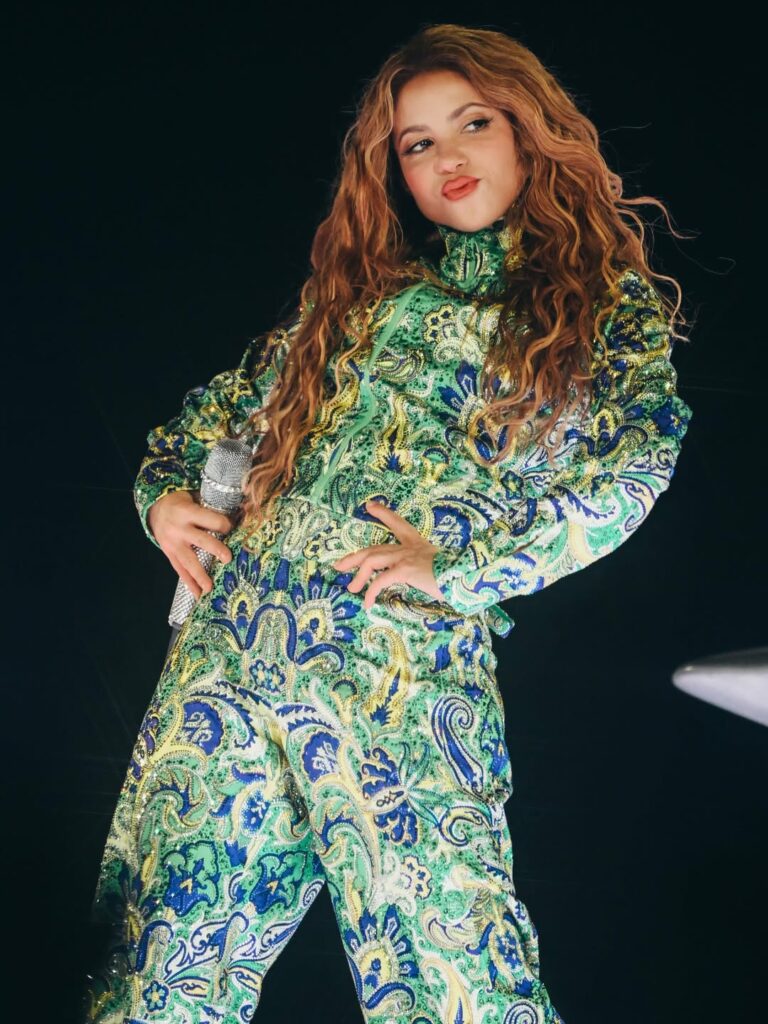
Shakira performed to an estimated two million people at a free concert in Copacabana Beach, Rio de Janeiro on Saturday 2 May 2026. The show headlined the Todo Mundo No Rio event, one of the largest live music gatherings in the world.
City officials confirmed the scale of the crowd following the performance, placing it among the biggest concerts ever staged.
Rio officials confirm two million turnout
Rio mayor Eduardo Cavaliere marked the moment on social media:
“Once again, history was made on the sands of Copacabana.”
He added:
“the queen of Latin America on the biggest stage on earth”
“Thank you very much. Bring it on, 2027!”
The two million attendance figure places Shakira’s show among the largest concerts in history. Rod Stewart still holds the record, drawing 3.5 million people to Copacabana Beach in 1994, while Jean-Michel Jarre reached a similar figure in Moscow in 1997.
Other notable large-scale concerts include Lady Gaga, who performed to 2.1 million at the same Rio event in 2025, and The Rolling Stones, whose 2006 Copacabana show drew around 1.5 million.
Suggested embed: live performance clips from Copacabana once available on YouTube
Part of Todo Mundo No Rio mega-event
The Todo Mundo No Rio concert series regularly attracts mass audiences to Copacabana, turning the beachfront into a large-scale open-air venue. Shakira’s headline set continues that tradition, reinforcing Rio’s position as a global destination for major live music events.
Shakira reflects on personal journey behind the tour
Ahead of the show, Shakira explained her decision to perform in Rio in a personal letter, linking the concert to a period of major change in her life following her split from Gerard Piqué.
“From that morning until today, I’ve had to entirely reinvent myself.
“As a mother, as a provider, as an artist, as a woman.
“And from that learning process, sometimes messy, sometimes illuminated by a kind of clarity only pain can bring, this tour was born: Las mujeres ya no lloran (Women No Longer Cry.)”
She added:
“It’s not a cry for revenge, nor a flag of victimhood. It’s exactly the opposite.
“It’s the quiet realization that crying is no longer enough, that there are children to raise, bills to pay, lives to push forward.
“And that it can be done, and it can be done with dignity.”
Connection with fans across the tour
Shakira said the global tour has brought her closer to fans experiencing similar challenges:
“As I travelled the world with this tour, I started to see my own face reflected in many others.
“Women who waited for me after shows to tell me, in two minutes and with shining eyes, their own version of the same story.
“Women who were alone but not defeated.
“And I understood that what I thought was a deeply personal experience was actually the shared biography of an entire generation of Latinas.
“Because the Latina woman has changed.”
She noted that perspective deepened in Brazil, where she learned that millions of single mothers are raising families independently:
“wow, I’m one of them.”
Copacabana as a global stage
Describing the setting, Shakira framed Copacabana as more than just a concert location:
“In a world consumed by screens, fear and conflict”
“Copacabana feels like the planet’s altar”
“a place that pulls people back to presence, gratitude and clarity”
She closed by inviting fans to join her at the landmark beachfront:
“where the human tide blends with the tide of the sea”
View this post on Instagram