
Taylor Swift has filed new trademark applications in the United States to protect her voice and image from AI-generated impersonations, marking a notable shift in how major artists are responding to the rise of synthetic media.
The filings, submitted by her company TAS Rights Management, cover both visual and audio elements linked to the singer’s identity. The move comes amid increasing concerns over the misuse of AI tools across music and social platforms.
What the trademark filings include
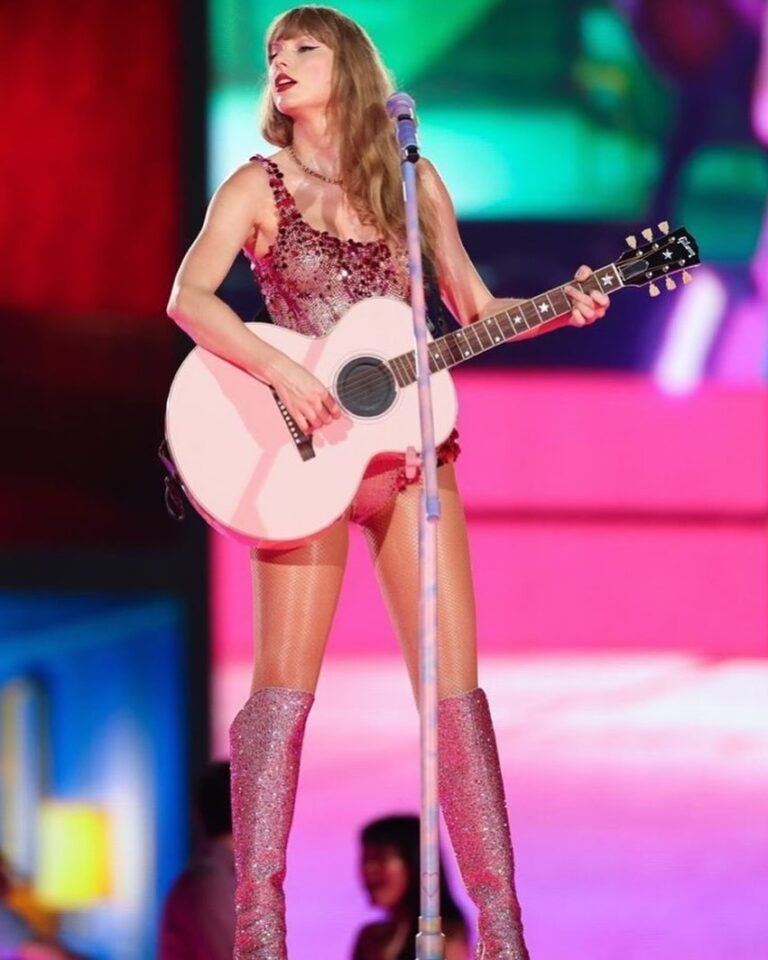
One application centres on a performance image of Swift taken during her record-breaking Eras Tour. According to the filing, the image shows her on stage:
“holding a pink guitar, with a black strap and wearing a multi-colored iridescent bodysuit with silver boots.”
The image has previously been used in promotional material for her Disney+ concert film tied to the tour.
Two additional applications focus on short audio clips used during the rollout of her latest album, The Life of a Showgirl, across platforms including Spotify and Amazon Music. These cover Swift introducing herself in simple phrases:
“Hey, it’s Taylor”
“Hey, it’s Taylor Swift”
Why artists are turning to Trademark Law
If approved, the trademarks would give Swift stronger legal grounds to challenge AI-generated voice clones and unauthorised uses of her likeness. The filings reflect a broader shift within the music and entertainment industries, where artists are exploring intellectual property law as a defence against rapidly advancing AI tools.
Swift has previously been targeted by AI-driven content, including manipulated explicit imagery and a fabricated political video that falsely suggested she endorsed Donald Trump.
Part of a wider industry trend
Swift is not alone in taking legal steps. Earlier this year, Matthew McConaughey became one of the first high-profile figures to pursue trademark protections specifically designed to safeguard voice and image rights against AI misuse.
The growing number of cases highlights how artists and public figures are adapting to a landscape where identity can be replicated and distributed at scale without consent.