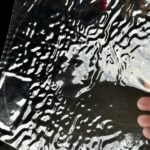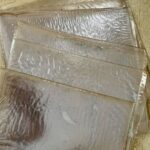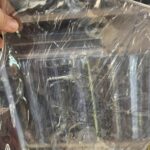
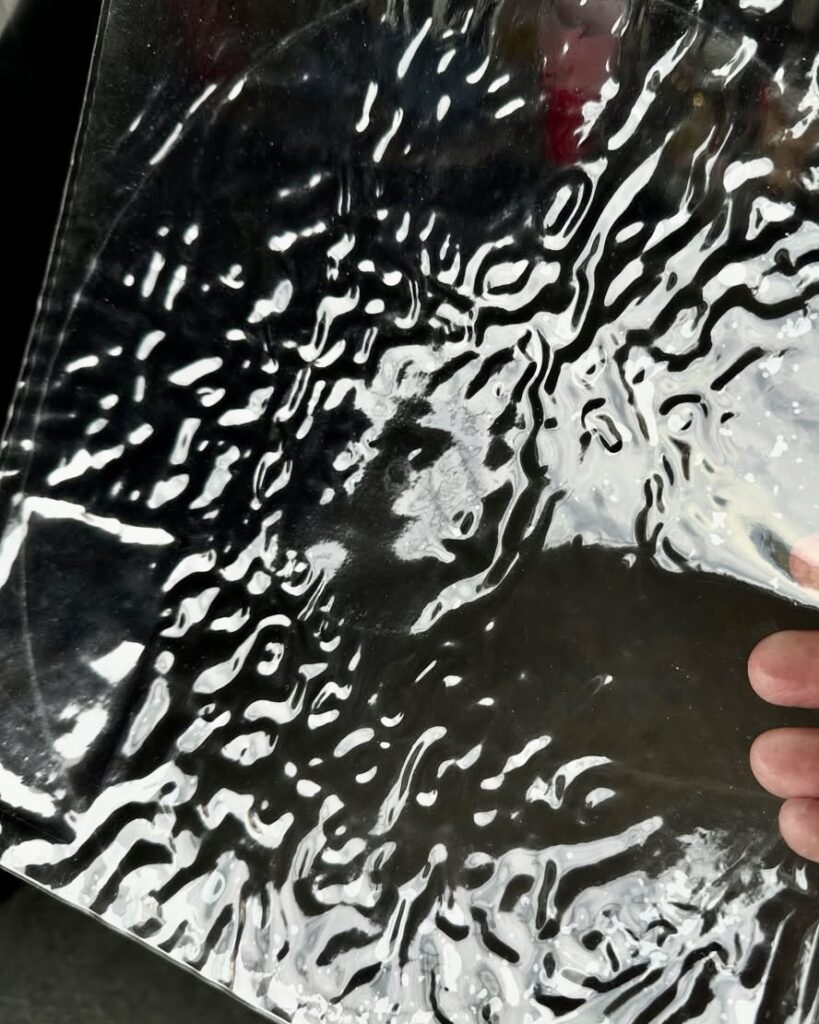
That thick, crystal-clear sleeve wrapped around your prized picture disc or limited-edition vinyl release might be doing more harm than good.
For decades, record labels have packaged picture discs, etched records, promotional releases and special editions in PVC sleeves. They look premium, show off the artwork beautifully and feel more substantial than standard protective covers. Yet many serious collectors now remove records from these sleeves as soon as they get them home.
The reason is a phenomenon known as off-gassing, a slow chemical process that can leave records with a cloudy haze, visible surface damage and, in some cases, increased playback noise.
The frustrating part is that the damage often happens while the record is sitting quietly on a shelf, stored exactly as the manufacturer intended.
If you collect vinyl, particularly picture discs, limited editions or releases from the 1970s through to the early 2000s, this is a subject worth understanding.
What is vinyl off-gassing?
Off-gassing occurs when certain plastics gradually release chemical compounds into the surrounding environment as they age.
The biggest concern for record collectors is polyvinyl chloride, commonly known as PVC. To make PVC flexible enough for use as a sleeve, manufacturers add chemical compounds called plasticisers. Over time, particularly when exposed to heat, sunlight or humidity, those compounds can migrate out of the plastic.
When this happens in a confined space, the released chemicals can react with nearby surfaces, including the vinyl record itself.
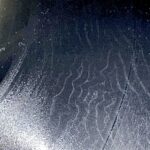
Collectors typically notice the problem when a record develops a foggy, cloudy or milky appearance that cannot be removed with cleaning. The damage often follows the shape of the sleeve or affects areas where the record has been in prolonged contact with the PVC.
Unlike fingerprints, dust or surface grime, this isn’t something that can simply be washed away.
It is a chemical reaction.

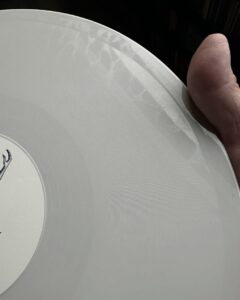

Why PVC sleeves can damage records
One of the biggest misconceptions among collectors is that all clear plastic sleeves are the same.
They are not.
PVC sleeves are chemically different from polyethylene (PE), polypropylene (PP) and polyester sleeves commonly used for archival storage.
As PVC ages, the plasticisers that give the material flexibility can begin to break down. The resulting chemical migration may leave visible marks on records and, in more severe cases, affect playback quality.
Collectors often refer to this as “PVC damage”, “plasticiser migration” or simply “off-gassing damage”.
The severity varies significantly. Some affected records remain perfectly playable, while others develop persistent surface noise, crackle or distortion that cannot be eliminated through cleaning.
The risk increases when records are stored:
- In warm environments
- In direct sunlight
- Near radiators or heat sources
- In lofts, garages or storage units
- In tightly packed collections with limited airflow
- Inside ageing PVC sleeves for long periods
Heat is particularly important because it accelerates the chemical breakdown process.
The warning signs every collector should know
The good news is that PVC damage often provides warning signs before it becomes severe.
Collectors should look out for:
- A strong plastic or “shower curtain” smell
- Sticky or tacky-feeling sleeves
- Cloudy or hazy patches on the vinyl surface
- Rainbow-like discolouration
- Sleeves that appear unusually thick and rigid
- Residue transferring from the sleeve to the record
- Records that become difficult to remove from the sleeve
If you notice any of these symptoms, it is worth investigating further.
Many collectors choose to replace suspect sleeves immediately, particularly if the record has significant financial or sentimental value.
Picture discs and special editions deserve extra attention
Picture discs are among the most vulnerable records in a collection, not because of the records themselves but because of how they are often packaged.
For decades, many picture discs arrived in PVC sleeves directly from the factory to showcase the artwork. Collectors naturally assumed that if the record was sold that way, it must be safe to store it that way.
Unfortunately, preservation standards and marketing decisions do not always align.
The same applies to:
- Etched vinyl releases
- Limited editions
- Promotional records
- Coloured vinyl box sets
- Certain Record Store Day releases
- Vintage singles sold in clear PVC wallets
The original packaging may be collectable, but that does not necessarily make it archival.
What should you use instead?
If you’re storing records for the long term, most collectors and preservation specialists recommend replacing PVC sleeves with archival-safe alternatives.
The good news is that safer materials are readily available and relatively inexpensive.
| Material | Archival Safe? | Cost | Durability |
|---|---|---|---|
| PVC | No | Low | Medium |
| Polyethylene (PE) | Yes | Low | High |
| Polypropylene (PP) | Yes | Medium | High |
| Polyester/Mylar | Yes | High | Very High |
Polyethylene and polypropylene sleeves have become the preferred choice for many collectors because they provide excellent protection without the chemical concerns associated with PVC.
Mylar and polyester sleeves are often used by archives, libraries and specialist collectors seeking the highest level of long-term preservation.
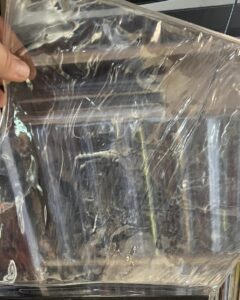
How to check your collection
You don’t need specialist equipment to identify potentially problematic sleeves.
A simple audit can be surprisingly effective.
Take a look through your collection and ask yourself:
- ✓ Does the sleeve feel thick, rigid or rubbery?
- ✓ Does it have a strong plastic smell?
- ✓ Is the record a picture disc or special edition that came in a clear outer sleeve?
- ✓ Are there any cloudy marks on the playing surface?
- ✓ Has the sleeve become sticky with age?
- ✓ Has the record been stored in the same PVC sleeve for years?
- ✓ Has the collection been exposed to significant heat or humidity?
If the answer to several of these questions is yes, it may be worth transferring the record to an archival-safe sleeve.
The simple fix that could save your records
Fortunately, the solution is neither expensive nor complicated.
Most collectors simply remove the record from the PVC sleeve and place it inside:
- An anti-static inner sleeve
- A paper sleeve with poly lining
- A polyethylene outer sleeve
- A polypropylene outer sleeve
The original PVC sleeve can then be stored separately if it contains hype stickers, unique artwork or collector value.
This approach allows collectors to preserve both the record and the original packaging without forcing them to remain in direct contact.
Vinyl collecting is about preservation
Part of the appeal of vinyl is its permanence.
A well-cared-for record can survive for generations. Some LPs pressed in the 1950s still play beautifully today because their owners stored them properly and handled them with care.
The challenge for modern collectors is recognising that not everything sold alongside a record is necessarily designed for long-term preservation.
PVC sleeves were created as packaging. Archival preservation was rarely the priority.
That doesn’t mean every record stored in PVC is doomed, nor does it mean collectors should panic and start throwing away every clear sleeve they own. It does mean that understanding the risks can help prevent avoidable damage.
For many collectors, a few hours spent checking their shelves could be the difference between preserving a collection for decades and discovering irreversible damage years down the line.